
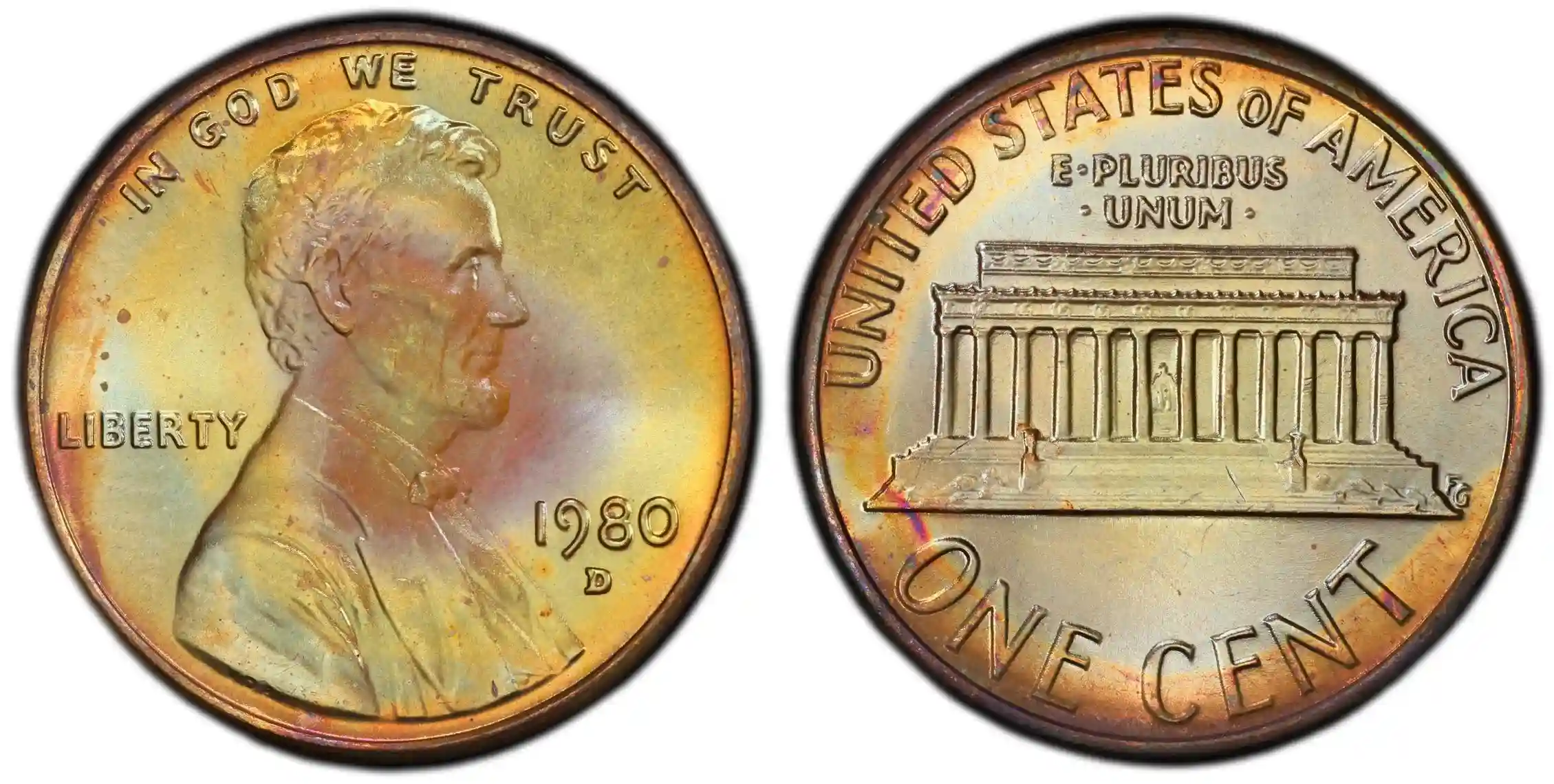
Standard 1980 penny pieces showing wear cost $0.02 to $0.04. Premium condition items reaching MS65 grade bring $2.00 to $4.50 market value.
Unique error specimens receiving MS67 grade sell for $800 to $1500, setting record price benchmarks at specialized auctions.
Parameter | Value |
Weight | 2.5 grams |
Diameter | 19.05 millimeters |
Composition | 95% copper base, 5% zinc |
Edge | Smooth |
Price Classification by Grade
Accurate price setting requires surface condition assessment per international grading standards. Grade system directly impacts asset liquidity.
Grade | Price Estimate |
MS60 | $0.50 to $0.70 |
MS63 | $1.00 to $1.50 |
MS65 | $2.00 to $4.50 |
MS66 | $10.00 to $25.00 |
MS67 | $50.00 to $150.00 |
MS68 | $400.00 to $900.00 |
Variety and Production Error
Doubled Die Obverse
Striking errors manifest as image element doubling on the obverse side. Pieces possessing clear date doubling command $50.00 to $200.00 market value. Perfectly preserved samples receive expert valuation reaching $800 or more.
Off-Center Strike
Blank misalignment against the die causes partial image absence.
10% offset earns $10.00 to $20.00. 50% offset with full date brings $300.00 to $600.00.
Die Crack
Mint tool cracks leave raised line marks on coin surfaces. Piece value ranges from $5.00 to $30.00 based on line size and sharpness.
Market Price Change Factors
Annual sales analysis shows rising demand for rare positions.
2024 price: $500.00
2025 price: $650.00
2026 price: $850.00
Stable positive dynamics characterize rare variety market trends.
Coin Condition Assessment Process
Visual inspection requires bright neutral light. Ten-power magnification tool usage reveals hidden defects.
Penny surface scan for scratches
Mint luster check
Lincoln portrait relief detail inspection
Active corrosion or spot control
Deep scratch existence drops market value by 90%. Original luster loss reduces specimen potential value by 70%.
Asset Storage and Protection Recommendations
Minimal skin contact prevents fast copper oxidation. Surface oil residues act as corrosion process catalysts.
Plastic capsule usage provides airtight protection against moisture. Dry storage prevents patina formation lowering the grade.
Paper holder regular replacement avoids moisture accumulation risks.
Collector Investment Strategy
Mass issue 1980 investments produce zero profit excluding rare minting errors. Bulk bag acquisition totaling 5000 units serves rare variety hunting goals.
Average bulk piece cost equals $0.016. Finding one production error piece worth $50.00 covers entire bag purchase costs.
Capital loss risk involves time spent on coin sorting.
Surface Condition Evaluation
Penny surfaces must remain free from mechanical cleaning traces. Pieces undergoing chemical agent cleaning attempts lose 95% value.
Micro-relief destruction during cleaning processes remains irreversible. Rough handling trace pieces hold value no higher than $0.01 face price.
Collectors maintaining proper storage methods ensure long-term capital preservation.
Competitive Advantage Analysis
Market supply exceeds buyer demand. MS66 plus grade specimen selection ensures selling advantage.
Recognized company certificate possession increases lot price. Certification costing $25.00 to $45.00 makes sense only for high market value pieces.
Standard penny selling without certificates works through volume-focused platforms.
Price Trend Analysis by Grade
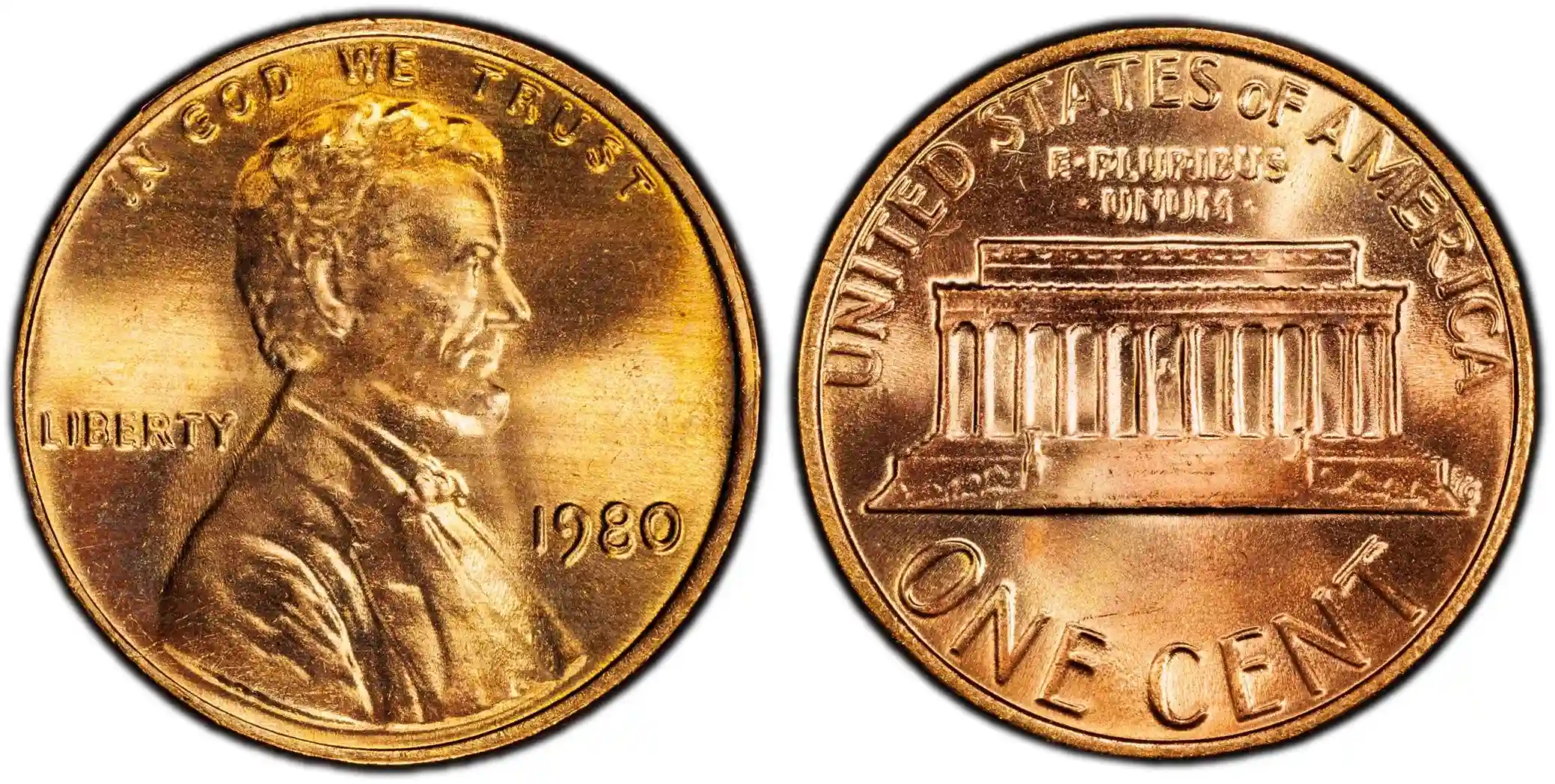
Clear correlation exists between grade and lot price. One-step grade growth in high MS65 to MS68 scale segments leads to multiple cost increases.
MS65 and MS66 price difference reaches 500%. MS67 and MS68 difference hits 1000% because of offer deficits.
Practical Sale Advice
Quality photo preparation increases final lot price. Relief detail photos build buyer trust.
Macro shooting under angled light reveals absence of defects. Lot descriptions must remain short containing grade information.
Emotional description avoidance attracts serious investors.
Auction House Work
Rare coin listing on large auctions ensures maximum audience reach. Auction house commission takes 15% to 20% from sale price.
Potential profit calculation must account for all accompanying costs. Auction coin shipping requires full market price insurance.
Uninsured lost lots represent critical financial events.
Denver Minting Features
D mint mark pieces under the date possess different demand indicators. Denver specimen price in high grades remains stably higher than Philadelphia counterparts.
D mark piece searching requires extra detail attention during sorting. Price difference between identical grades hits 15% favoring D mark coins.
Bulk Lot Processing
5000 piece sorting takes 10 to 12 hours of work.
Sorting process optimization includes special tray and lens usage. High value rare variety searching requires focus.
Repetitive sorting motions often lead to mint error misses. Systematic approach excluding skips determines final batch profit.
Market Analysis 2024 to 2026
1980 coin sales volume shows steady growth. MS67 rare specimen price grew by 40% over two periods.
Asset value growth possessing collector value outpaces inflation. Demand stability explains physical asset interest during economic instability.
Investors forming rare coin portfolios diversify risks.
Coin Manufacturing Technology
1980 production process used copper blanks possessing different weights compared to later periods. 95% copper composition makes the coin more corrosion resistant than modern zinc analogues.
Knowing these features allows numismatists to distinguish fakes made on late blanks. Weight deviation exceeding 0.1 grams requires authenticity verification.
High precision scale usage serves as a necessary primary examination stage.
Fake Detection
Rare variety falsification like Doubled Die remains common on the market. Fake pieces created by engraving methods possess characteristic cutter traces.
Doubled element clear boundary absence indicates imitation. Database reference photo comparison helps reveal mismatches.
Any authenticity doubt justifies lot purchase refusal.
Cleaning Attitude
Physical penny surface interference reduces price to face value. Abrasive material patina removal attempts destroy specimen value.
Unprofessional chemical use leads to metal spots. Specimens retaining natural copper color always receive higher valuations.
Principal cleaning refusal remains a rule for successful numismatists.
Tool Set
Basic tool set possession reduces evaluation time.
Lighted magnifying glass
0.01 gram precision scale
Plastic tweezers for gripping
Neutral spectrum LED lamp
Equipment investment pays off by preventing purchase errors.
Standard Grade Price Dynamics
Sales statistics show narrow price ranges for low grade coins. MS60 to MS63 grade specimen price remains practically unchanged over long periods.
These grade coin liquidity remains limited because of high prevalence. Such piece acquisition brings zero investment profit. Main capital concentrates in high MS66 to MS68 grade segments.
Value Loss Examples from Storage
MS66 grade penny left in open air loses luster in one period. Grade drop to MS63 leads to price fall from $20.00 to $1.50.
Loss equals over 90% of initial value. Example demonstrates storage condition control importance for expensive pieces.
Each metal damage case results from surface protection rule neglect.